
Ask a room of people to name a Canadian rapper, and many will stop at Drake. Ask what Canadian hip-hop actually sounds like, and the answers spread out fast: Toronto rhymes built on reggae and dancehall, East Coast storytelling, jazz-leaning wordplay, and melodic tracks that drift between rap, soul, and rhythm and blues (R&B).
That range is what makes Canadian hip-hop artists so interesting to explore, and especially revealing when you’re choosing music for a live audience. The 10 hip-hop artists below are an editorial selection, not a ranking: pioneers who built the scene, artists who pushed it somewhere new, and contemporary voices, with women represented throughout.
The artists’ recordings also offer a starting point for understanding live hip-hop.
What Makes a Canadian Hip-Hop Artist Stand Out?
Popularity alone doesn’t capture an artist’s contribution. This selection considers six qualities:
- Distinctive Voice: Recognizable tone, accent, or delivery.
- Lyricism: Memorable wordplay and storytelling.
- Musical Originality: Inventive production and genre blends.
- Cultural Contribution: Representing communities and new perspectives.
- Influence: Inspiring the next generation.
- Live Performance: Connecting with audiences onstage.
Awards and charts add context, but don’t define this selection. Pioneers, contemporary artists, and women who shaped the genre all belong here.
Hip-hop is only one thread in the country’s music story, of course. It sits alongside rock, pop, R&B, and folk among the Top Canadian Artists, and many of those acts have borrowed from it.
10 Canadian Hip-Hop Artists with Distinctive Sounds
The 10 artists span generations. ONQ’s entertainment profiles appear separately below.
1. Maestro Fresh Wes
Maestro Fresh Wes is widely called the godfather of Canadian hip-hop, and his early run shows why. His 1989 single “Let Your Backbone Slide” became the first Canadian rap single certified gold, proving there was a real audience for homegrown rap.
His delivery is direct and rhythmic: clean diction, a steady cadence, and verses written to land on the first listen. That clarity is a big part of why the song crossed over to listeners who didn’t think of themselves as hip-hop fans. In 2019, it became the first rap song inducted into the Canadian Songwriters Hall of Fame.
On stage, his direct delivery and recognizable catalogue anchor his performance identity.
2. Michie Mee
Michie Mee brought Jamaican roots into Toronto hip-hop before most of the world knew the city had a scene. Born in Kingston and raised in Toronto, she blended rap with reggae and dancehall at a time when few masters of ceremonies (MCs) were mixing the two.
In 1988, she became the first Canadian hip-hop artist to sign with a major U.S. label, and her debut album, Jamaican Funk—Canadian Style, earned a Juno nomination for rap recording. That made her a reference point for female hip-hop artists in Canada: proof that a woman from Toronto could compete on an international stage.
Her battle-rap background and patois-inflected delivery give her a distinctive stage voice.
3. Kardinal Offishall
Kardinal Offishall turned Toronto’s Caribbean influence into a sound that travelled far beyond the city. His voice is big and expressive, sliding between sharp rap cadences and the melodic, dancehall-style delivery he grew up around.
Singles like 2001’s “BaKardi Slang” spoke directly to Toronto’s West Indian community, and 2008’s “Dangerous,” featuring Akon, were followed by JUNO recognition, including Rap Recording of the Year for Not 4 Sale and Single of the Year for “Dangerous”. Both songs show his range: one is a hometown declaration, the other a polished international hit.
His expressive delivery and rhythmic hooks support an energetic performance style.
4. Drake
Drake is a big reason many people outside Canada started paying attention to Toronto hip-hop. His influence comes from blurring lines: he made it normal for a rapper to sing his own hooks and for a moody R&B track to sit right next to a hard verse.
His 2011 album Take Care deepened the atmospheric sound he built with producer Noah “40” Shebib, and its success helped push that slower, more melodic style into the mainstream. Many younger artists in this list and beyond have worked in the space he opened. His arena-scale shows reflect his influence; he is not listed as an ONQ booking option.
5. k-os
k-os took an alternative route through Canadian hip-hop, treating rap as one tool among many. He raps, sings, and plays guitar, and his records borrow freely from rock, soul, reggae, and pop.
That approach paid off. At the 2005 Junos, he won three awards, including single of the year for “Crabbuckit,” a breezy, bass-driven track that sounded nothing like anything else on Canadian radio at the time.
His live identity blends rap, singing, and instrumental musicianship.
6. K’naan
K’naan is a storyteller first. Born in Somalia and raised partly in Toronto, he writes about displacement, family, and survival with a poet’s eye for detail, often drawing on his own experiences of leaving Mogadishu.
Most people know him for “Wavin’ Flag,” which became a global anthem around the 2010 World Cup. His catalogue runs much deeper than one crossover hit. His arrangements combine African and Western instrumentation, sometimes with traditional Somali melodies, and his debut, The Dusty Foot Philosopher, won the Juno for rap recording in 2006.
His stage identity is grounded in poetic storytelling and Somali-Canadian experience.
7. Classified
Classified proved you don’t need to come from Toronto, Montreal, or Vancouver to make it in Canadian hip-hop. He’s from Enfield, Nova Scotia, and he produces much of his own music, building the beats as carefully as the verses.
His music grew more distinctive as he centred stories and perspectives rooted in small-town East Coast life. That honesty made his storytelling easy to connect with, whatever the listener’s postal code.
His accessible hooks and East Coast storytelling invite audience connection.
8. Shad
Shad has earned a reputation for thoughtful lyricism and inventive wordplay. Born in Kenya to Rwandan parents and raised in London, Ontario, he writes thoughtful, funny, and socially aware verses packed with wordplay that rewards a second listen.
His 2010 album TSOL won the Juno for rap recording, beating out Drake, and he’s been shortlisted for the Polaris Music Prize several times. He also hosted the documentary series Hip-Hop Evolution, which explains the genre’s history for a wide audience.
His conversational style puts humour, ideas and wordplay at the centre.
9. Haviah Mighty
Haviah Mighty raps with a technical precision that stands out even among veteran MCs. The Brampton artist switches tempos mid-verse, stacks internal rhymes, and keeps every syllable clear, even at speed.
In 2019, her debut album 13th Floor won the Polaris Music Prize, making her the first hip-hop artist and first Black woman to take the prize. That success wasn’t a one-off. She later won the 2022 Juno for rap album of the Year for Stock Exchange.
Her precise, fast-changing flows and melodic passages showcase her rhythmic range.
10. TOBi
TOBi blends rap, soul, and R&B into something smooth, warm, and emotionally direct. The Nigerian-born, Brampton-raised artist draws on hip-hop, R&B, neo-soul, and Afrobeats, and his Nigerian-Canadian perspective shapes both his sound and his subject matter.
His 2020 album Elements, Vol. 1 won the Juno for rap recording and was shortlisted for the Polaris Music Prize. One standout from that project, “Made Me Everything,” turns hardship into a celebration, with horns and a soulful groove underneath.
His live identity moves between soulful singing and rhythmic rap.
How Canadian Hip-Hop Connects with Live Audiences
On a recording, hip-hop lives in the details: a clever line, a beat switch, a hook you replay. In a room, it works differently. The audience responds to storytelling they can follow, a flow that locks onto the rhythm, cultural references they recognize, and a performer who treats them as part of the show. Call-and-response, a hook the whole room can shout back, can turn attentive listeners into active participants.
The format you choose shapes all of that, so it helps to know what each one delivers:
- Original Rap Set: The artist performs their own songs, live on the mic. Guests hear the voice behind the record, which works best when they know the music or are ready to listen.
- DJ Set: A disc jockey (DJ) blends recorded hip-hop with other genres and reads the room in real time. The vocals come from the records, not a live rapper, but the energy can stay high for hours.
- Instrumental Interpretation: A band reworks hip-hop songs as instrumentals, often with horns or keys carrying the melody. Nobody raps, which makes it a softer fit for dinners, receptions, and mixed-age crowds.
Not every act offers every format; confirm the proposed set.
For a company event, the format should follow the program rather than the other way round. Experienced corporate event DJs can carry a room from cocktails into dancing, while a rap set works best as a defined moment, such as a headline slot after dinner. Think about your audience too: a room of longtime fans will want the artist’s own songs, while a broader crowd may connect faster with familiar hits, clean versions, and a performer who keeps the energy inclusive.
Discover Hip-Hop Artists and Entertainment with ONQ Live
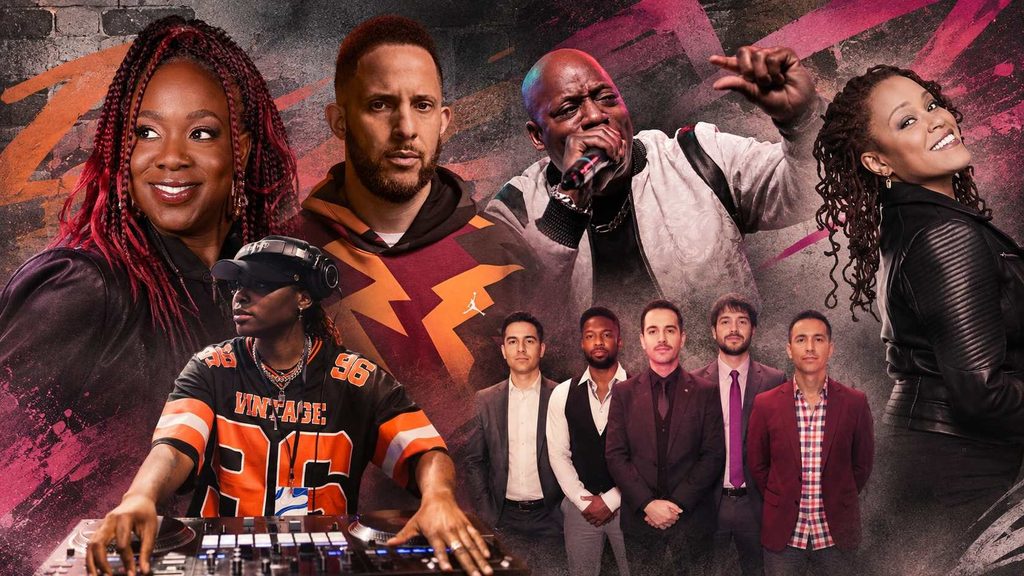
The following acts have ONQ Live profiles and are separate from the editorial top 10. Their representation, availability, and performance details require confirmation. The other artists above, including Drake and Kardinal Offishall, are discussed for their contributions, not presented as ONQ booking options.
Match the act to your event format:
- Rap Vocals with Reggae Roots: Michie Mee blends hip-hop, reggae and dancehall. Enquire about a vocal set reflecting her Toronto rap legacy.
- Lyric-Led Rap Performance: Toronto rapper Dan-e-o is known for “Dear Hip Hop” (1996) and boom-bap-influenced, lyric-focused performances.
- Familiar Canadian Hip-Hop: Choclair‘s catalogue includes “Let’s Ride” and “Northern Touch.” Confirm any requested songs before booking.
- Hip-Hop DJ and Host: Mel Boogie offers DJ and hosting experience, not a live rap concert. Discuss music direction and hosting needs in advance.
- Multi-Genre Event DJ: DJ Shannyn Hill mixes R&B, dancehall, reggae, Top 40, and urban styles. Specify your desired hip-hop focus and set format.
- Hip-Hop Through Jazz: ONQ Hip-Hop Jazz reimagines hip-hop through horn-led instrumental jazz. It is not a performance by the original rappers. Its horn-led arrangements also suit upscale settings, as seen at a luxury boutique grand opening for L’ORO Canada in Yorkville.
Before anything goes into a contract, confirm each artist’s current roster status, availability, repertoire, clean-set requirements, and performance format with the ONQ team. Vocal performances sit alongside ONQ’s wider roster of recording artists, many of whom work across R&B, soul, and pop as well as hip-hop. Not every event needs a live vocalist, though. ONQ’s full list of DJs covers everything from hip-hop and urban sets to house and open format.
Share your event date, venue, audience, and preferred sound to discuss suitable ONQ hip-hop entertainment.
Frequently Asked Questions
1. Can our company record or livestream a hip-hop performance?
Recording and livestreaming require permission and an agreed scope. Specify distribution and future use. DJ mixes and covers may involve additional music rights.
2. Can a booked artist include a company name or message in the performance?
Ask whether a shout-out or custom line is possible. Share the wording and confirm the artist’s agreement within the booking scope.
3. What should we confirm before using an artist’s photo in event promotion?
Confirm image rights, allowed channels, and usage period. Check photographer credits and avoid implying endorsement without permission.
4. Can we arrange a meet-and-greet alongside the performance?
Meet-and-greets require advance agreement. Specify the duration, guest count, location, and photography expectations.
5. How can I enquire about booking hip-hop entertainment through ONQ Live?
Start by sharing your event date, venue, expected audience, and the style of hip-hop you want, whether that’s a rap performance, a DJ, or an instrumental band. To book an artist, start with ONQ Live’s artist directory; the team can discuss suitable acts and confirm availability and terms.