
From Jeff Healey’s expressive guitar solos to Dawn Tyler Watson’s powerful vocals, Canada’s blues scene is full of artists worth discovering.
Blues originated in Black American communities in the southern United States, where generations of musicians developed the expressive vocals, rhythms, and instrumental techniques that continue to define the genre. Canadian blues artists have built on that tradition, bringing their own approaches to electric blues, acoustic storytelling, soul, and blues-rock.
Whether you’re discovering blues for the first time or looking for new music, these 12 artists offer a great place to start. Explore their signature sounds, contributions to Canada’s blues scene, and recommended albums.
What Makes These Blues Artists Essential Listening?
There’s no objective list of the best blues artists, and this one is a listening guide, not a ranking. Each pick earned a place because it gives a new listener something specific to hear:
- Expressive Vocals: Phrasing, grain, and dynamics that carry a song’s meaning, from a near-whisper to a full shout.
- Instrumental Phrasing: How a guitar, harmonica, or bass line speaks, answers the singer, and knows when to leave space.
- Songwriting: Original songs that sit comfortably next to the standards these artists grew up on.
- Performance Identity: A sound you could pick out of a playlist within a few bars.
- Contribution to Canada’s Blues Scene: Recordings, recognition, mentoring, and years on the road that keep the music alive here.
Together, these artists show the range of Canada’s blues scene, from intimate acoustic performances to energetic electric bands. Some are celebrated for their guitar playing, others for their unmistakable voices or inventive arrangements. Each offers a different way to experience the blues.
12 Artists Who Helped Shape Canada’s Blues Scene
The list moves between electric bands, solo acoustic sessions, duos, and horn-driven ensembles. Each entry notes whether the artist was born in Canada or built a career here, then points you to one album and what to listen for on your first spin.
1. Jeff Healey
Born in Toronto in 1966, Jeff Healey lost his sight as an infant and developed one of the most recognizable techniques in blues-rock, playing his guitar laid flat across his lap and fretting from above. His leads are full of wide bends and fierce vibrato, and he sang in a warm, unforced voice that kept the songs grounded. See the Light, his 1988 debut with bassist Joe Rockman and drummer Tom Stephen, mixes radio songs like “Angel Eyes” with a take on Freddie King’s instrumental “Hideaway.”
Listen for how his guitar articulation changes when the vocal drops out: tight and conversational behind the singing, then sharp and wide open in the solos.
- Start Listening: See the Light, The Jeff Healey Band (album, 1988)
2. Colin James
Born in Regina, Colin James has moved between blues-rock, jump blues, and soul since the mid-1980s. Blue Highways takes him back to the source. It’s a set of blues songs he’d long wanted to record, cut in about two days in Vancouver, with material tied to Howlin’ Wolf, Jimmy Reed, Freddie King, Peter Green, and Robert Johnson.
Because other artists made these songs famous first, the pleasure is in his interpretation. Listen for how his guitar phrasing answers each vocal line, and how the arrangements keep the band’s rhythm tight without sounding stiff.
- Start Listening: Blue Highways (album, 2016)
3. Harrison Kennedy
Hamilton-born Harrison Kennedy spent the early 1970s as a lead vocalist with Chairmen of the Board, and that soul training runs through everything he sings. His solo work folds blues, soul, and roots storytelling together. This Is From Here features six of his own songs and guitarist Colin Linden on several tracks, and it won the 2016 Juno Award for Blues Album of the Year.
Listen for vocal character first: the rasp, the held notes, and the way he leans on a single word. Then notice the space the arrangements give to acoustic textures, which lets every detail of the voice come through.
- Start Listening: This Is From Here (album, 2014)
4. Sue Foley
Ottawa-born Sue Foley made her name in Austin’s electric blues scene. That background makes One Guitar Woman a striking change of pace. She plays every track on a single nylon-string flamenco guitar, saluting women who shaped guitar playing across blues, folk, gospel, classical, and Tejano music, including Elizabeth Cotten, Memphis Minnie, Sister Rosetta Tharpe, Lydia Mendoza, and Ida Presti.
Most of the songs come from those players’ repertoires, not from Foley’s pen; her contribution is the interpretation, plus an original, “Maybelle’s Guitar,” written for Maybelle Carter. Listen for her fingerpicking and how the nylon strings soften the attack while keeping the rhythm crisp.
- Start Listening: One Guitar Woman: A Tribute to the Female Pioneers of Guitar (album, 2024)
5. Crystal Shawanda
Crystal Shawanda is an Anishinaabe singer from Wiikwemkoong First Nation on Manitoulin Island, and her voice can move from a smoky low register to a full-throated cry inside one chorus. Sing Pretty Blues sets that range against an electric band anchored by horns and harmonica, with funk grooves and slow-burning ballads. Her originals sit alongside covers such as Son House’s “Preaching Blues.”
Listen for the push and pull between lead vocal and band. When the horns hit, she digs in harder instead of floating above them, and on the ballads she pulls back to let the guitar and keys carry the mood. Her blues catalogue now spans several albums, so this one is a strong doorway into the rest.
- Start Listening: Sing Pretty Blues (album)
6. Angelique Francis
Ottawa-born Angelique Francis is a singer and multi-instrumentalist who plays upright bass, harmonica, keys, and cigar box guitar, and on Not Defeated she adds guitars, organ, lap steel, and more. Her blues sits close to soul, gospel, funk, and roots music, and her family band brings in saxophone, trombone, and harmony vocals from her sisters. Guests include Eric Gales and Christone “Kingfish” Ingram.
Listen for vocal dynamics: she’ll hold a verse back, then lift the chorus with gospel force. The rhythmic momentum is just as important, especially on funk-blues tracks like “Do That Work.”
- Start Listening: Not Defeated (album, 2025)
7. Big Dave McLean
Saskatchewan-born Big Dave McLean counted Muddy Waters as a mentor and has spent decades shaping blues in Western Canada. On This Old Life, he sings, plays harmonica, and picks a National resonator guitar, with the core tracks cut live, mostly in first takes. The 14 songs lean on classic material from Muddy Waters, Guitar Slim, and Blind Lemon Jefferson, alongside three McLean originals.
Listen for restraint. Nothing is overplayed, so the storytelling, the grain of his voice, and the bite of the resonator guitar carry each song.
- Start Listening: This Old Life (album, 2024)
8. Brandon Isaak
Born in Whitehorse, Yukon, and now based on Vancouver Island, Brandon Isaak is a singer-guitarist whose lyrics often balance hard times with humour. Walkin’ With the Blues was recorded live off the floor with his band, The Saints of Swing. Isaak produced and engineered it himself, a first for him. In 2026, the album won three Canadian Blues Music Awards (CBMAs), including Blues Song of the Year and Blues Guitarist of the Year.
Listen for his vocal phrasing, which sits just behind the beat, and for the dialogue between his guitar and the rhythm section. His solos stay understated, so the groove does as much talking as the guitar.
- Start Listening: Walkin’ With the Blues (album, 2025)
9. Steve Marriner
Ottawa-born and Toronto-based, Steve Marriner fronts the blues-rock band MonkeyJunk and plays harmonica, baritone guitar, keys, and bass, among other instruments. He also works as a producer, with credits on recent records by Big Dave McLean and David Gogo. Hear My Heart won the 2026 Juno Award for Blues Album of the Year.
The album blends blues, rock, and roots songwriting, and the instrumentation changes with each song rather than following one formula. Listen for which instrument leads each arrangement, and for how much room his harmonica gets when it steps forward.
- Start Listening: Hear My Heart (album, 2025)
10. Blue Moon Marquee
Blue Moon Marquee is a duo, not a solo act: A.W. Cardinal on guitar and vocals, and Jasmine Colette on upright bass, vocals, and a foot-operated drum kit. Both were born in Alberta, and their sound mixes blues with swing, jazz, and roots. New Orleans Sessions adds piano, saxophone, and drums, and it was cut live off the floor in New Orleans with four originals and early blues songs such as Memphis Minnie’s “Black Rat Swing.”
Listen for vocal character: Cardinal’s gravelly delivery against Colette’s sweeter tone, sometimes trading lines and sometimes singing together. Then follow the rhythmic interplay between her bass and the drums, which keeps everything swinging.
- Start Listening: New Orleans Sessions (album, 2024)
11. David Gogo
Nanaimo, B.C., guitarist and singer David Gogo has built a long career in electric blues and blues-rock, and YEAH! shows his looser side. He recorded it at a studio in a 140-year-old farmhouse near Cobourg, Ontario, with Steve Marriner, Jimmy Bowskill, and drummer Gary Craig, keeping many first takes. Originals like “Moose Hall Brawl” keep the energy high.
Listen for guitar tone, since he played the studio’s own guitar collection on almost every track, and for phrasing that sounds spontaneous rather than worked out. Notice, too, how his vocals sit inside the band instead of floating above it.
- Start Listening: YEAH! (album, 2024)
12. Dawn Tyler Watson
Born in England and raised in Southwestern Ontario, Dawn Tyler Watson moved to Montreal to study jazz at Concordia University and built her career there. Her singing blends blues with jazz and soul, and Mad Love won the 2020 Juno Award for Blues Album of the Year. On the album, she’s backed by the Ben Racine Band and a horn section, with originals like “This & That” alongside a duet with Racine.
Listen for vocal dynamics: playful and teasing one minute, full power the next. The horns don’t just decorate the tracks; they punch, answer, and push her to sing harder.
- Start Listening: Mad Love (album, 2019)
How to Explore Blues Beyond Your First Track
Once a record clicks, the quickest way to go deeper is to compare. A few listening habits make the next album easier to choose:
- Set Acoustic Against Electric: Play a solo acoustic performance next to a full electric band recording. One gives you detail and intimacy, with every breath and string squeak audible; the other gives you drive, volume, and the conversation between instruments.
- Follow a Voice or an Instrument: If a singer or a harmonica player grabs you, check the album credits and follow that name onto other records. Session players and producers turn up across many albums, so one favourite often leads to five more.
- Compare Studio and Live Versions: Studio takes are usually tighter, while live sets stretch out with longer solos and crowd energy. Hearing both shows you what an artist treats as fixed and what they leave open.
It also helps to drop a common assumption. The blues isn’t limited to one tempo or to the 12-bar form: plenty of songs use 8-bar or 16-bar patterns, one-chord grooves, or loose structures, and tempos range from a slow drag to a fast shuffle. If your first pick was a slow burner, try something upbeat next, and you’ll hear how much ground the style covers.
Discover Blues and Blues-Influenced Performers with ONQ Live
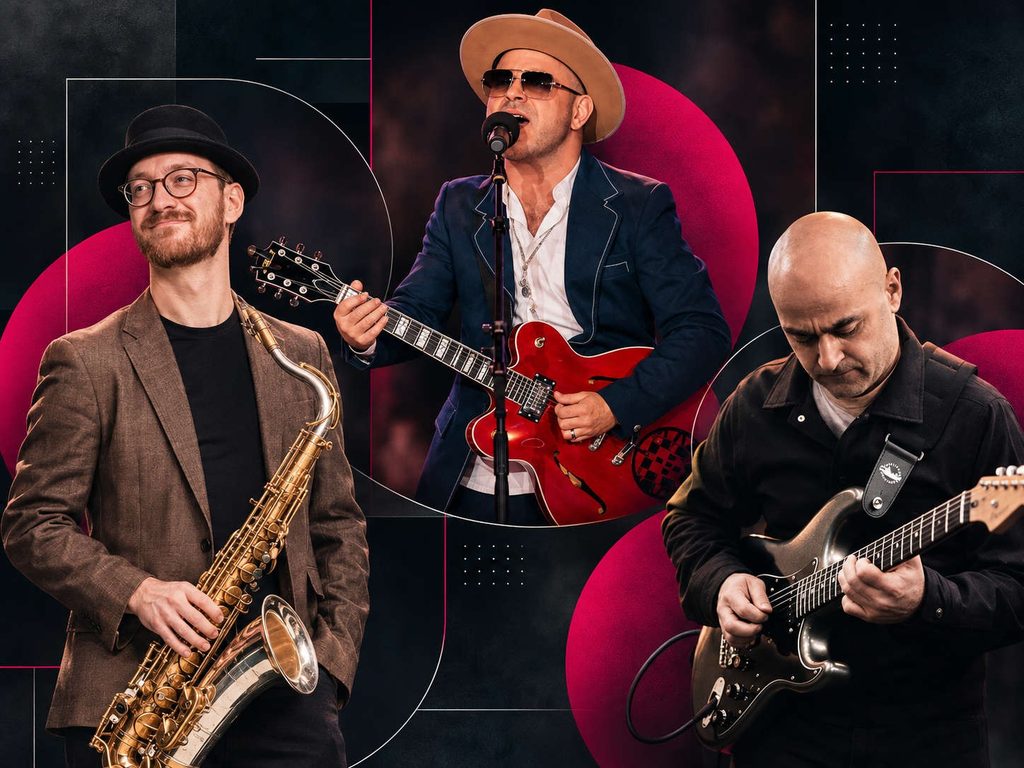
Listening to a blues recording is one experience. Hearing musicians perform live brings a different energy, with expressive solos, rhythmic interplay, and spontaneous moments. The 12 artists above are an editorial listening guide, not ONQ’s roster. For event organizers looking to bring elements of blues, jazz, funk, and soul into a celebration, ONQ Live offers performers and ensembles worth exploring.
ONQ Big Sax: Blues, Jazz, Funk and Gospel
ONQ Big Sax combines southern jazz, blues, funk, and gospel influences. Its energetic, blended sound is worth considering for corporate receptions and galas, rather than assuming a strictly traditional blues set. ONQ Big Sax Band has also performed at a corporate gathering at Toronto’s Art Gallery of Ontario, where 500 global delegates attended an evening with live music. Confirm the proposed repertoire, lineup, and availability for your event.
Kaven Jalbert: Saxophone with Blues Experience
For a saxophone-led performance, Kaven Jalbert brings experience with the Ben Racine Band and blues vocalist Dawn Tyler Watson. His musical background also includes jazz, funk, and popular music. He is an instrumental option, not a blues singer or a guaranteed full-band booking; confirm the performance format and availability.
Nelson Sobral: Blues, Soul and Guitar-Led Performances
Toronto-based singer, guitarist, and bandleader Nelson Sobral performs a mix of blues, soul, rock, and roots music. His ONQ profile offers flexible solo, duo, trio, and full-band formats, making him a strong option for anything from intimate receptions to lively celebrations. Ask about the blues selections and lineup available for your event.
Samvel Khachatryan: Blues-Influenced Electric and Acoustic Guitar
Toronto-based guitarist Samvel Khachatryan combines electric and acoustic guitar with influences ranging from jazz and blues to lounge and contemporary music. His range makes him worth considering for an instrumental, guitar-led atmosphere. Confirm how prominently blues can feature in the proposed set.
Find the Right Live Music for Your Event
From intimate receptions to large celebrations, the right arrangement can help create the atmosphere you’re looking for. Explore ONQ’s live bands for ensemble options, or see how corporate event entertainment can complement conferences, networking events, and galas.
Planning an event? Share your date, venue, audience size, and preferred musical style with ONQ Live. The team can help you explore suitable performers, confirm repertoire and availability, and discuss the performance format that fits your occasion.
Frequently Asked Questions
1. Why can the same blues song sound so different across recordings?
A song and a recording aren’t the same thing. The composition is the melody, lyrics, and structure, while each recording is one artist’s interpretation of it, with its own arrangement, tempo, key, and instrumentation. Some songs also exist in several versions by the same performer, from early studio takes to live recordings, so check which version you’re actually hearing.
2. Are older blues recordings available in good-quality remastered editions?
Many are, but the result depends on what survived: some reissues come from clean master tapes, while others are restored from worn discs. Check the label information and liner notes for the source used, and compare editions where you can. Newer isn’t always better, since some remasters push the volume or use heavy noise reduction that dulls the original sound.
3. Do blues songs always tell autobiographical stories?
Not always. Singers draw on their own lives, but they also tell fictional stories, take on characters, and reuse verses that circulate across the tradition. Treat a first-person lyric as a performance, not proof of what happened to the person singing it.
4. Can I use these blues recordings in a public event or promotional video?
Not without the right permissions, and an old recording isn’t automatically free to use. Playing music in public and syncing it to a video usually involve different rights: public playback is often covered by licences from organizations such as the Society of Composers, Authors and Music Publishers of Canada (SOCAN) and Re:Sound, while a video needs synchronization permission from the song’s publisher and the recording’s owner. Contact the relevant rights holders or a licensing body before you build a plan around a specific track.
5. How can I enquire about live blues entertainment through ONQ?
You can explore professional musicians and book an artist through ONQ Live. Share your event date, location, expected audience size, and preferred musical style. The ONQ team can help identify suitable performers and confirm repertoire, performance format, and availability before booking.