
Pop music isn’t just a genre; it’s a global language. Derived from “popular,” pop music is defined by its ability to cross borders, dominate airwaves, and soundtrack the most important moments of our lives. From the pulsating beats of a crowded festival to the romantic first dance at a wedding, pop artists create the hooks that stay in our heads for years.
Let’s go over the top pop artists.
What Defines a Pop Music Artist?
A pop music artist is usually defined by their ability to create music with wide mainstream appeal. Pop songs are often built around strong melodies, clear song structures, catchy choruses, and lyrics that are easy for listeners to connect with. While every artist has their own style, the goal of pop music is often accessibility: songs that people can remember, sing along to, and enjoy in many different settings.
The best pop artists usually share a few key characteristics.
- They know how to create memorable hooks.
- They understand how to build a strong image.
- They often maintain consistent chart presence, whether through radio hits, streaming numbers, music videos, tours, or viral moments.
- Many also blend genres to keep their sound fresh.
Today, it is common to hear pop mixed with R&B, dance, hip-hop, electronic music, Afrobeats, country, or alternative influences.
This genre-blending is one of the reasons pop continues to evolve. A pop artist does not have to fit one narrow sound. Instead, they often reflect what audiences are listening to at a specific moment while still making music that feels easy to access and enjoy.
Top Male Pop Music Artists
Male pop music artists have played a major role in shaping the modern sound of mainstream music. From smooth vocals and acoustic songwriting to dance-driven production and genre-blending albums, today’s male pop stars often move between styles while keeping a strong connection with global audiences.
Global Male Pop Icons
The Weeknd is one of the most distinctive male pop artists of the last decade. His music blends pop, R&B, electronic sounds, and dark cinematic production. With his strong falsetto, atmospheric sound, and memorable visual branding, he has helped bring alternative R&B and synth-pop influences into the mainstream. His success also shows how a pop artist can build a recognizable world around their music, not just a collection of singles.
Justin Bieber became a global pop figure at a young age and has continued to evolve his sound over time. His music has moved through teen pop, acoustic ballads, dance-pop, R&B, and electronic collaborations. His ability to adapt has helped him stay relevant across different eras of pop music. He is also a strong example of how digital platforms and fan communities can help shape a pop artist’s career.
Harry Styles has built a pop career that combines modern songwriting with classic rock, soft pop, and fashion-forward performance. His music often feels warm, melodic, and expressive, while his stage presence and visual identity have made him one of the most recognizable performers in the industry. Styles also shows how today’s pop artists can succeed by creating a full artistic identity around music, fashion, and live performance.
Ed Sheeran represents a different side of pop: intimate songwriting with massive global appeal. His acoustic-driven style, emotional lyrics, and simple but memorable melodies have made his songs popular for radio, weddings, first dances, and live acoustic performances. His success proves that pop does not always need heavy production to connect with audiences. Sometimes, a strong melody and relatable story are enough.
What Sets Male Pop Artists Apart
Many male pop artists stand out because of their vocal style, songwriting approach, stage performance, and brand identity. Some are known for emotional ballads, while others are known for high-energy shows or genre-blending production. Their ability to cross into R&B, dance, rock, folk, or electronic music helps them reach different audiences without losing their pop appeal.
Top Female Pop Music Artists
Female pop music artists have shaped not only the sound of modern pop but also its visual direction, cultural impact, fashion influence, and storytelling style. Many of today’s leading women in pop are more than singers. They are songwriters, performers, creative directors, business leaders, and cultural trendsetters.
Leading Female Pop Artists
Taylor Swift is one of the most influential pop artists in the world, known for her songwriting, storytelling, reinvention, and strong fan engagement. Her career has moved from country to mainstream pop, indie-folk-inspired songwriting, and large-scale stadium pop. Swift is also the first and only artist to win the Grammy Award for Album of the Year four times, highlighting her impact across multiple eras of music.
Beyoncé is one of the most celebrated performers in modern music. Her work blends pop, R&B, soul, hip-hop, dance, and more, often paired with powerful visuals and carefully designed live performances. As of the 2025 Grammy Awards, Beyoncé had 35 Grammy wins and 99 nominations, making her the most-awarded and most-nominated artist in Grammy history.
Ariana Grande is known for her impressive vocal range, smooth pop-R&B sound, and polished production. Her music often combines emotional pop melodies with R&B-inspired vocals and contemporary beats. Grande’s style is especially influential among younger pop audiences, and her vocal approach has helped shape the sound of many modern female pop artists.
Dua Lipa has become one of the leading names in dance-pop. Her music often combines disco, electronic production, strong basslines, and confident vocals. She is a strong example of how pop music can bring dance-floor energy back into mainstream culture while still feeling modern and radio-friendly.
Why Female Pop Artists Lead Trends
Female pop artists often lead trends because they shape more than the sound of music. They influence fashion, visual storytelling, choreography, performance style, social media culture, and fan engagement. A strong female pop artist often builds a complete creative identity, from album visuals and music videos to tour design and public image.
Emerging and Trending Pop Artists
Pop music is always changing, and new artists can rise quickly through streaming platforms, social media, and viral music trends. TikTok, Instagram Reels, YouTube Shorts, and Spotify playlists have changed how people discover music. A short clip can introduce a song to millions of listeners in a matter of days.
Emerging pop artists today often build their audiences before traditional radio support. They may start with independent releases, acoustic clips, live covers, or viral hooks. Once a song catches attention online, it can move into playlists, radio, touring, and brand opportunities.
Some trending pop artists also stand out because they are not limited to one genre. They might combine bedroom pop with R&B, electronic music with indie vocals, or dance music with nostalgic production. This makes modern pop more diverse and gives audiences more ways to connect with new sounds.
Pop Music by Style and Mood
Pop music is not one single sound. It can be bright and energetic, soft and emotional, stylish and electronic, or soulful and vocal-driven. Understanding these styles helps when choosing music for playlists, live performances, or events.
Upbeat Pop Hits
Upbeat pop songs are perfect for dancing, celebrations, cocktail receptions, festivals, and high-energy event moments. These songs usually have fast tempos, strong choruses, and production that encourages movement. They are often used to lift the mood, fill the dance floor, or create a fun, social atmosphere.
Emotional and Ballad Pop
Emotional pop and ballad-style songs focus more on vocals, lyrics, and feeling. These songs are popular for wedding ceremonies, first dances, dinner sets, acoustic performances, and more intimate event moments. A strong ballad can create a memorable pause in an event and give audiences something meaningful to connect with.
Pop with R&B or Electronic Influence
Modern pop often overlaps with R&B and electronic music. Pop-R&B usually features smooth vocals, emotional melodies, and groove-based production. Electronic-influenced pop often includes synths, dance beats, and polished production. These hybrid styles are especially popular for lounges, upscale parties, corporate events, and modern weddings because they feel current but still accessible.
Pop Music for Events and Live Performances
Pop music is the “universal language” of events. Because it’s widely recognizable, it acts as a bridge between generations, making it a safe yet exciting choice for:
- Weddings: From sentimental ceremony walks to late-night dance floor anthems.
- Corporate Events: Creates a polished, high-end atmosphere that remains approachable.
- Private Parties: Keeps the mood social, energetic, and light.
Live Performance vs. Playlists
While a playlist is easy, it can’t “read the room.” Live performance adds a layer of engagement that digital audio simply lacks:
- Energy & Interaction: Live performers can adjust tempo and interact with guests to keep the vibe alive.
- Personalization: A skilled vocalist can take a global hit and make it feel intimate and unique to your moment.
- Visual Impact: Beyond the sound, guests get a “show” that adds emotional weight to weddings and product launches.
Why Experience Pop Music in Canada with ONQ Live
Canada has a rich history of producing pop legends, from Shania Twain to Shawn Mendes, and ONQ Live represents the next generation of that excellence.
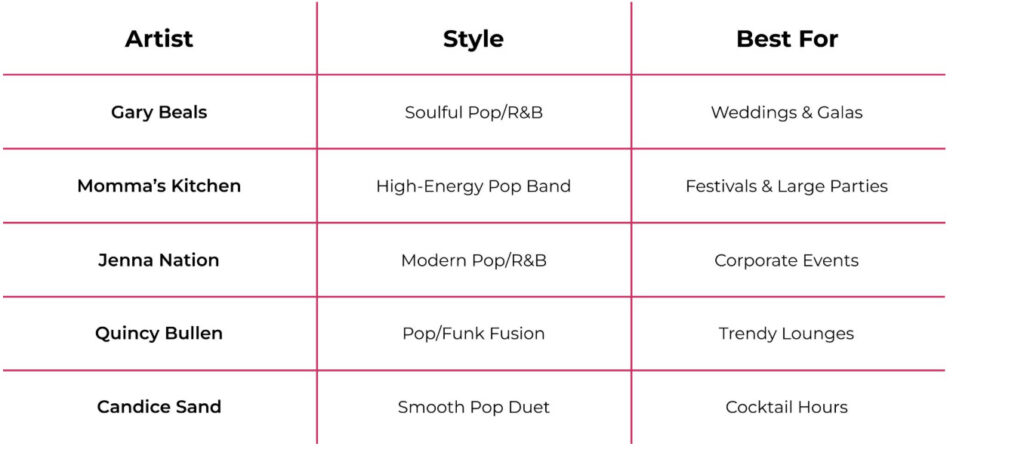
- Professional Pedigree: Our roster includes touring vocalists and recording artists like Quincy Bullen and Gracie Ella, who know how to captivate an audience.
- Diverse Repertoire: We cover everything from the local hits of Alessia Cara to the global anthems of Harry Styles.
- Canadian Culture: Our artists embody the Toronto and national pop scene, offering bilingual options and “city-smart” presentations for corporate stages.
- Customizable Scale: Whether you need an intimate duet with Claire Davis or a full arena-style show, we scale to your needs.
Featured ONQ Artists
How to Choose the Right Pop Artists or Music for Your Event
Choosing the right pop music for an event starts with understanding the audience.
1. Match the Music to the Audience
- Weddings: Mix “throwback” classics with modern hits to keep all generations on the dance floor.
- Corporate Events: Opt for polished, “clean” versions of hits that sound stylish without being distracting.
- Private Parties: Go for high-energy, recognizable favourites to keep the vibe upbeat.
2. Pick Your Performance Style
- Solo Vocalist: Best for intimate dinners or low-key receptions.
- Duet or Trio: Adds warmth and harmony without overwhelming the room.
- Full Live Band: Creates a “concert-style” experience for maximum impact.
- DJ: Ideal for late-night sets and seamless transitions between many genres.
3. The “Professional” Advantage
Booking experienced performers from a platform like ONQ Live ensures:
- Expert Pacing: They know when to slow it down and when to ramp up the energy.
- Audience Reading: The ability to pivot the setlist if the crowd responds better to a specific style.
- Technical Quality: High-end sound, smooth transitions, and polished stage presence.
Common Mistakes When Choosing Pop Music
- One common mistake is focusing only on current hits. While trending songs are important, not every guest will know them. A stronger event playlist or live set usually includes a mix of current songs, older favourites, and timeless pop classics.
- Another mistake is ignoring the event type. A song that works well at a nightclub-style party may not be right for a corporate dinner or wedding ceremony. Pop music should match the mood, timing, and purpose of each event moment.
- Poor sound setup is another issue. Even great performers can struggle if the audio is not planned properly. Professional sound, the right equipment, and a clear understanding of the venue are essential for a successful live music experience.
- Finally, some people choose music based only on personal taste. While the host’s preferences matter, event music should also consider the guests. The best pop music choices balance personality with broad audience appeal.
Pop music artists continue to shape the music industry because their songs are memorable, flexible, and deeply connected to culture. Book a pop artist at ONQ to elevate your day.
Frequently Asked Questions
1. Can a pop artist perform a specific song that isn’t in their repertoire? Yes! Most professional pop artists and bands are happy to learn a “special request” song, such as a first dance for a wedding or a themed opener for a corporate event. We usually recommend providing the request at least 4-6 weeks in advance so the performers can perfect the arrangement.
2. What is the difference between booking a solo pop singer and a full live band? It all comes back to the energy and space of your event:
- Solo Artists: Perfect for cocktail hours, intimate lounges, or events with limited space. They often perform with high-quality backing tracks or a single instrument (like piano or guitar).
- Live Bands: Ideal for receptions and parties where you want a “stadium” feel. A full band (drums, bass, guitar, keys) creates a visual and auditory impact that gets everyone on the dance floor.
3. How long does a typical live pop performance last? Standard bookings usually consist of two 45-minute sets or three 30-minute sets over a 3-hour period. However, we are completely flexible! Whether you need a high-impact 20-minute “feature show” or a full night of music interspersed with a DJ, we can tailor the timing to your itinerary.
4. How do I know if a pop artist is the right fit for my “clean” or “corporate” event? Professionalism is our top priority. Our artists are experienced in “clean” performances for corporate and all-age audiences. They can provide radio-edited versions of popular hits, ensuring the lyrics and stage presence are appropriate for your specific guest list.
5. Should I book a band, a DJ, or both? For maximum energy, we recommend both. A live band provides the “wow” factor and emotional connection, while a DJ ensures continuous music during band breaks and handles late-night requests.