
Alternative rock widened the possibilities of mainstream rock by drawing from punk, post-punk, grunge, indie rock, art rock, electronic music and other experimental styles. Instead of following one established formula, artists used the genre to explore unfamiliar guitar tones, unconventional production and more personal forms of songwriting.
From college-radio pioneers to Canadian bands with international influence, these 15 alternative rock artists changed how rock could sound, feel and connect with an audience. Their influence comes from distinctive songwriting, production choices, stage presence and the ability to inspire later generations of musicians.
What Makes an Alternative Rock Artist Influential?
Influence is not determined by sales or chart success alone. Some rock artists reached enormous audiences, while others made their greatest impact by inspiring the people who heard them in clubs, rehearsal rooms and independent record shops.
Influential artists often share several qualities:
- Originality: A sound or creative approach that is immediately recognizable.
- Songwriting: Lyrics and arrangements that expand what rock can communicate.
- Guitar & Production Choices: Distortion, feedback, alternate tunings, electronic textures or unusual recording techniques.
- Emotional Honesty: A willingness to explore alienation, anger, anxiety, identity and personal conflict.
- Live Performance: A stage presence that changes how audiences experience the music.
- Visual Identity: Artwork, fashion and videos that become part of the artist’s creative language.
- Cultural Impact: Influence reaching beyond music into youth culture, fashion or public conversation.
- Longevity: Music that remains relevant across different generations.
- Creative Legacy: A clear influence on later performers.
Canadian musicians have contributed significantly to alternative and modern rock. Alanis Morissette brought emotional directness to the mainstream, Arcade Fire expanded the scale of indie rock, The Tragically Hip created a distinctly Canadian songwriting voice, and bands such as Billy Talent and Metric developed recognizable sounds of their own. We explore this wider musical influence on our guide to top Canadian artists.
Live performance is equally important. The ability to hold a room, communicate emotion and respond to an audience often reveals why an artist’s work lasts. Those same qualities matter when selecting live entertainment for corporate events, where the right performance must connect with the setting as well as the people in it.
15 Alternative Rock Artists Who Changed the Sound of Rock
The following artists represent different generations and branches of alternative rock, with each contributing something distinct to the genre.
Alternative Rock Pioneers
These early innovators helped alternative rock develop through college radio, independent labels and underground performance scenes.
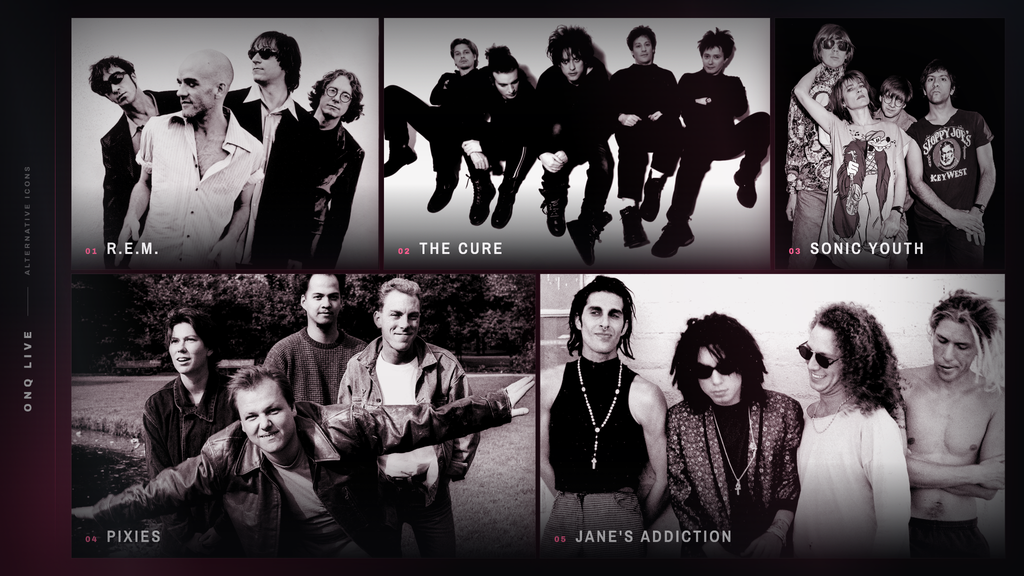
1. R.E.M.
R.E.M. helped establish a path from American college radio to international success. Peter Buck’s ringing guitar, Mike Mills’s melodic bass and Michael Stipe’s elusive vocal style created music that felt thoughtful without losing its momentum. The band showed that independent-minded songwriting could reach a broad audience while retaining its mystery and emotional depth.
2. The Cure
The Cure moved between post-punk minimalism, dark atmospheric rock and bright melodic pop without losing its identity. Robert Smith’s voice, introspective lyrics and instantly recognizable visual style gave the band a powerful emotional presence. Their layered guitars and synthesizers influenced gothic rock, dream pop, emo and generations of alternative performers.
3. Sonic Youth
Sonic Youth approached the electric guitar as a source of texture, rhythm and controlled noise. Alternate tunings, feedback and prepared instruments allowed the band to create sounds far outside conventional rock technique. Their work connected New York’s experimental scene with a wider alternative audience and influenced noise rock, shoegaze and indie guitar music.
4. Pixies
Pixies transformed contrast into a songwriting tool. Their songs could move suddenly from restrained verses to explosive vocals and distortion, creating the quiet-loud dynamic that later became central to alternative rock. Surreal lyrics, angular guitar parts and strong pop instincts made the band a major influence on Nirvana and countless later performers.
5. Jane’s Addiction
Jane’s Addiction combined hard rock, punk, funk and psychedelic music with an unpredictable theatrical presence. Perry Farrell’s distinctive vocals and Dave Navarro’s expansive guitar work helped the band stand apart from conventional late-1980s rock. Farrell’s creation of Lollapalooza also helped bring alternative music and culture to audiences across North America.
Artists Who Defined the 1990s Alternative Sound
During the 1990s, alternative music moved into the mainstream while continuing to challenge familiar ideas about rock.
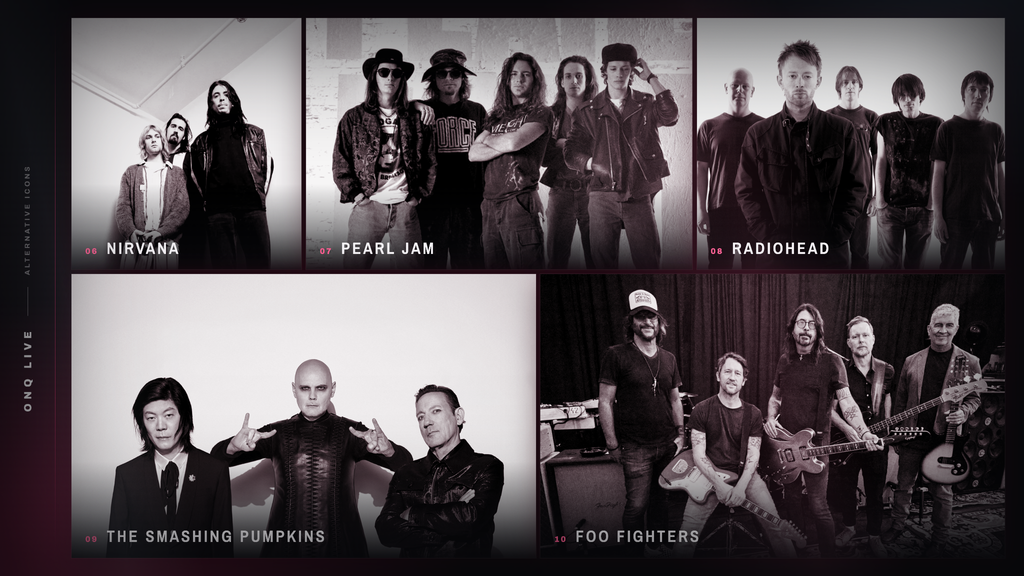
6. Nirvana
Nirvana combined punk directness, heavy guitar and sharp melodic instincts. Kurt Cobain’s writing captured frustration, isolation and emotional conflict without trying to resolve them neatly. The success of “Nevermind” brought grunge and the Pacific Northwest scene to a global audience, creating wider opportunities for less conventional bands.
7. Pearl Jam
Pearl Jam joined the force of hard rock with emotionally serious songwriting and a strong live identity. Eddie Vedder’s commanding vocals and the band’s layered guitar work gave songs about alienation and social pain a large physical presence. Their changing setlists and long-term commitment to touring also helped establish an enduring relationship with listeners.
8. Radiohead
Radiohead repeatedly changed its musical language rather than recreating earlier success. The band moved from guitar-driven alternative rock into electronic production, fragmented rhythms and abstract arrangements. Its willingness to place guitars beside synthesizers, strings and digital manipulation expanded expectations of what a major modern rock band could become.
9. The Smashing Pumpkins
The Smashing Pumpkins brought exceptional scale and contrast to 1990s alternative rock. Billy Corgan’s layered guitar production could sound heavy, dreamlike or delicate, sometimes within the same song. The band’s mixture of distortion, orchestral ambition and vulnerable writing showed that alternative music could be intimate and grand at once.
10. Foo Fighters
Foo Fighters helped carry alternative rock beyond the grunge era. Dave Grohl built the band’s sound around forceful drums, direct melodies and choruses designed for a live audience. Their music balanced emotional sincerity with accessible songwriting, helping shape the sound of mainstream alternative and modern rock for decades.
Canadian Rock Artists with Lasting Influence
Canadian artists have contributed to alternative rock through distinctive voices, regional perspectives and a willingness to cross musical boundaries.

11. Alanis Morissette
Alanis Morissette expanded the emotional vocabulary of mainstream alternative rock. “Jagged Little Pill” combined candid writing with powerful vocals and guitar-led production. Her songs allowed anger, humour, desire and vulnerability to coexist, influencing later performers who wanted to write about personal experience without softening its contradictions.
12. Arcade Fire
Arcade Fire brought Montreal indie rock to an international audience with music that felt both personal and communal. The band combined guitars with strings, piano, accordion, percussion and layered vocals. Its ambitious arrangements showed how independent rock could become expansive without losing the intimacy at the heart of its songwriting.
13. The Tragically Hip
The Tragically Hip created a body of rock music closely connected to Canadian places, history and identity. Gord Downie’s vivid lyrics turned regional references into emotionally universal stories, while the band’s direct, energetic performances built an unusually strong relationship with audiences. Their influence remains especially profound within Canadian rock culture.
14. Billy Talent
Billy Talent developed a distinctive sound through Ian D’Sa’s sharp, rhythmic guitar playing, Benjamin Kowalewicz’s urgent vocals and the band’s politically aware writing. Their music combines punk speed with alternative-rock structure and memorable hooks. That balance helped the band reach international audiences while maintaining a recognizable Canadian identity.
15. Metric
Metric blends alternative rock with synthesizers, dance rhythms and Emily Haines’s cool but emotionally precise vocals. The band’s ability to move between intimate writing and driving electronic-rock production helped shape the sound of Canadian indie music in the 2000s and beyond. Metric also demonstrated how guitars and electronic elements could share equal space.
How Alternative Rock Changed Modern Rock Music
Alternative rock did more than introduce new bands. It changed what audiences expected from rock music and gave artists greater freedom to experiment.
Its influence remains clear in several areas:
- Songwriting: Anxiety, alienation, mental health, identity and social criticism became central subjects rather than secondary themes.
- Guitar Production: Musicians used feedback, alternate tunings, dense layers, unusual effects and dramatic shifts between quiet and loud passages.
- Independent Culture: College radio, independent labels, local venues and grassroots touring became viable routes to larger audiences.
- Visual Identity: Fashion, artwork, music videos and stage presentation became meaningful extensions of an artist’s perspective.
- Genre Boundaries: Rock became more open to electronic production, hip-hop rhythms, folk instrumentation, pop melodies and experimental structures.
Alternative musicians also changed how audiences listened to the guitar. Tone, effects, texture and atmosphere could be just as important as solos or technical skill, an evolution also reflected in the work of influential Canadian guitarists.
Today’s rock artists continue to combine alternative rock with punk, pop, electronic music, hip-hop, folk and R&B. The genre’s most lasting lesson is that rock evolves when artists are willing to question what it is supposed to sound like.
Discover Alternative and Rock Artists with ONQ Live
The legacy of alternative rock becomes most tangible in live performance, where distinctive sounds and authentic stage presence can transform an event.
At ONQ Live, we connect audiences with rock, alternative and tribute performers for corporate gatherings, festivals, private celebrations and public events. Our current roster includes artists who approach guitar-driven music from several creative directions:
- ASD Band delivers original alternative pop-rock with an inspiring story and an energetic ensemble performance. Formed in 2019, the group features four musicians on the autism spectrum and has developed its sound through original releases and prominent Canadian performances.
- The Canadiana Band presents a high-energy tribute to Canadian rock, pop and folk. Its repertoire celebrates artists such as The Tragically Hip, Bryan Adams, Blue Rodeo, The Guess Who and Neil Young, making it especially well suited to festivals, corporate occasions and Canada Day events.
- Michelle Kwan brings a striking cross-cultural perspective to rock performance. Using the traditional Chinese guzheng with effects such as distortion, delay, wah and chorus, she reinterprets familiar rock material with a powerful contemporary sound.
Depending on the venue, audience and desired atmosphere, we can help you explore full live bands for an energetic, room-filling experience or consider established recording artists whose original music can give an occasion a distinctive identity.
Alternative rock continues to matter because it gives musicians permission to question familiar formulas. These 15 artists changed rock in different ways, but each introduced a sound, idea or performance style that later musicians could build upon. Their influence remains present whenever an artist takes an unexpected direction and makes it connect with an audience.
Frequently Asked Questions
1. What is alternative rock music?
Alternative rock is a broad form of rock that developed largely through independent and underground music scenes. It draws from punk, post-punk, indie rock, grunge, electronic music and other styles, with an emphasis on experimentation and creative independence.
2. Who are the most influential alternative rock artists?
R.E.M., The Cure, Sonic Youth, Pixies, Jane’s Addiction, Nirvana and Radiohead are among the most influential. However, the answer depends on whether influence is measured through songwriting, guitar style, production, performance or cultural impact.
3. Which artists helped define alternative rock in the 1990s?
Nirvana, Pearl Jam, Radiohead, The Smashing Pumpkins and Foo Fighters helped define different sides of the decade’s alternative sound, from grunge and guitar-heavy rock to more experimental production.
4. Who are some famous Canadian rock artists?
Alanis Morissette, Arcade Fire, The Tragically Hip, Billy Talent and Metric are important Canadian alternative and rock artists. Other widely known Canadian rock names include Rush, Neil Young, The Guess Who, Sum 41 and The Beaches.
6. How is alternative rock different from classic rock?
Classic rock generally refers to established rock music from earlier decades. Alternative rock grew from independent, punk and post-punk scenes and often uses different production methods, emotional themes and attitudes toward mainstream culture.
7. How did grunge influence alternative rock?
Grunge combined punk energy with heavy guitar tones and emotionally direct songwriting. Its mainstream success in the early 1990s created wider opportunities for alternative bands and changed the dominant sound of rock radio.
8. Can I book a live rock or alternative artist for a private or corporate event?
Yes. To book an artist, share your event date, venue, audience and preferred sound with us. We can help you find a rock, alternative or tribute performance suited to the occasion.