
Classical music can instantly change the mood of a room. A violin, piano, or string trio can make a wedding, corporate event, private party, or formal dinner feel more elegant, emotional, and intentional.
In Toronto, classical music remains a popular choice for hosts who want music that feels refined, romantic, and memorable without overpowering the occasion.
What Makes Classical Music a Great Choice for Events?
The best event music supports the moment. It should add atmosphere without taking attention away from the reason people are gathered.
Classical music does this beautifully.
For example:
- During a wedding ceremony, it can make the entrance feel emotional and graceful.
- During a corporate dinner, it can create a professional and elegant mood.
- During a private party, it can make the space feel more elevated.
- During a luxury brand event, it can add sophistication and drama.
- During a cocktail hour, it can fill the room without making conversation difficult.
The same classical piece can also feel completely different depending on the instrument. Canon in D on solo piano feels soft and romantic. On a string quartet, it feels formal and ceremonial. On an electric violin, it can feel modern and stylish.
That flexibility is what makes classical music so useful for live events.
Popular Classical Music Songs Everyone Recognizes
Not sure where to start? Here are some of the most popular classical music songs often used for weddings, formal occasions, elegant dinners, and special events.
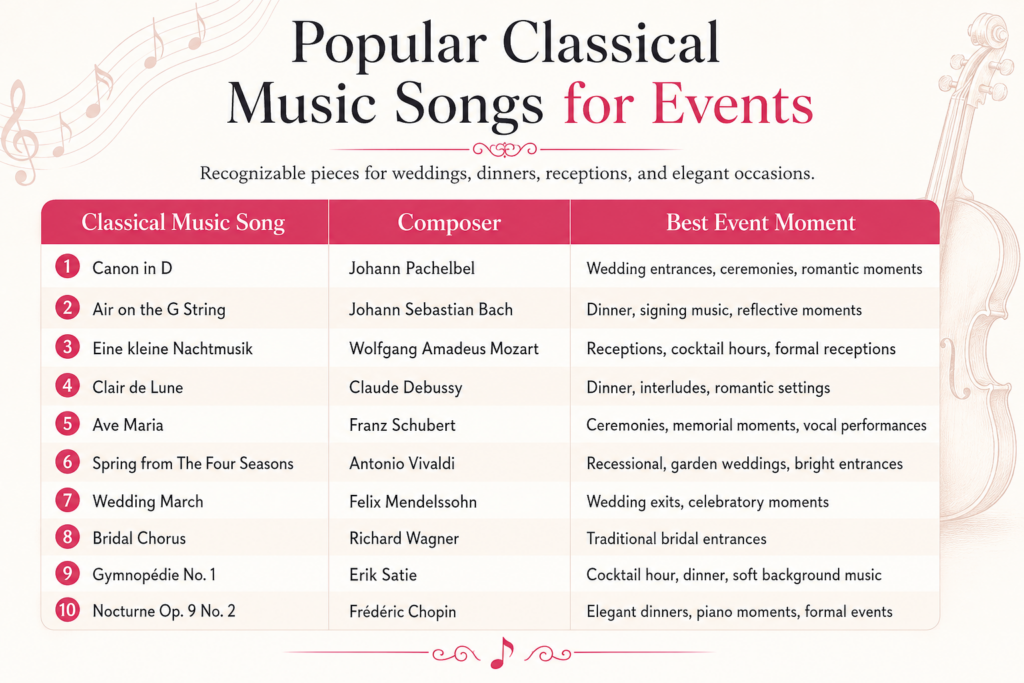
Choose the feeling first, then choose the song.
- Romantic: Canon in D, Clair de Lune, Nocturne Op. 9 No. 2
- Traditional: Bridal Chorus, Wedding March, Ave Maria
- Elegant and calm: Air on the G String, Gymnopédie No. 1
- Bright and celebratory: Spring, Eine kleine Nachtmusik
- Luxury and dramatic: Opera-inspired vocals, cello solos, string quartet arrangements
Best Classical Music Songs for Weddings
Classical music and weddings naturally go together. It gives each part of the ceremony its own feeling, from the walk down the aisle to the final exit.
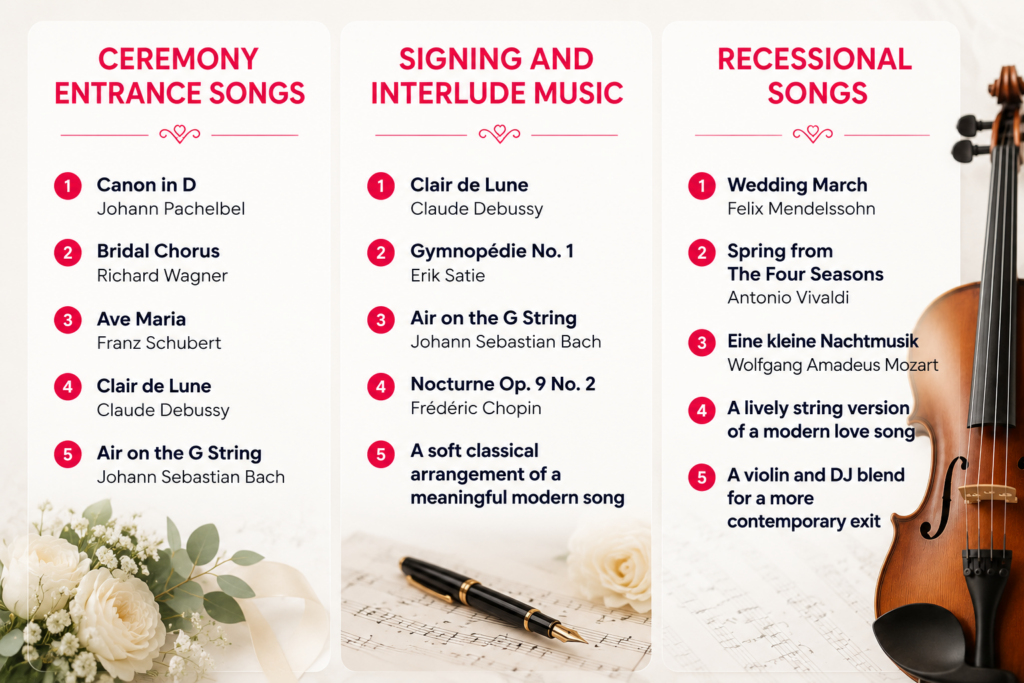
Ceremony Entrance Songs
This is the moment everyone remembers. The music should feel emotional, graceful, and paced well enough for the walk.
Popular choices include:
- Canon in D — Johann Pachelbel
- Bridal Chorus — Richard Wagner
- Ave Maria — Franz Schubert
- Clair de Lune — Claude Debussy
- Air on the G String — Johann Sebastian Bach
For a softer entrance, piano or harp can work beautifully. For a more formal entrance, a string trio or quartet can make the moment feel grander.
Signing and Interlude Music
Signing music should feel peaceful and elegant. It needs to hold the atmosphere while guests wait, but it should not distract from the ceremony.
Good choices include:
- Clair de Lune – Claude Debussy
- Gymnopédie No. 1 – Erik Satie
- Air on the G String – Johann Sebastian Bach
- Nocturne Op. 9 No. 2 – Frédéric Chopin
- A soft classical arrangement of a meaningful modern song
This is also a great moment to choose something personal. A couple may select a song that feels connected to their story and ask musicians to arrange it in a classical style.
Recessional Songs
The recessional is the celebratory moment. The music can become brighter, faster, and more joyful.
Popular recessional options include:
- Wedding March — Felix Mendelssohn
- Spring from The Four Seasons — Antonio Vivaldi
- Eine kleine Nachtmusik — Wolfgang Amadeus Mozart
- A lively string version of a modern love song
- A violin and DJ blend for a more contemporary exit
The key is energy. After the ceremony, guests are ready to clap, smile, take photos, and move into the next part of the celebration.
Popular Classical Music Songs for Corporate Events
Classical music is not only for weddings. It is also a smart choice for corporate events, networking receptions, award nights, formal dinners, product launches, luxury brand events, and black-tie gatherings.
Why? Because it sets a polished tone without competing with conversation.
A solo pianist can make a hotel ballroom feel warmer. A violinist can welcome guests as they arrive. A string trio can add refinement to a cocktail reception. A cello performance can create a strong featured moment during an awards ceremony or gala dinner.
ONQ Live offers live entertainment for corporate events, private events, social events, festivals, and weddings, and its classical music options include solo violin, piano, cello performances, duets, and trios.
For corporate events, classical music works especially well when it is planned around the schedule:
- Guest arrival: light violin, piano, or harp
- Networking: soft instrumental classical music
- Dinner: piano, cello, or string duet
- Awards or speeches: short featured performance
- Luxury reveal or brand moment: dramatic strings or opera-inspired vocals
Classical Music for Private Parties and Formal Dinners
For private parties, classical music can make a smaller space feel instantly more special.
A dinner at home, an anniversary celebration, a milestone birthday, a proposal, or an intimate reception can all feel more memorable with live classical music. The performance does not need to be large. In many cases, one excellent musician is enough.
Consider these options:
- Solo piano for warm, refined background music
- Solo violin for romantic entrances and intimate performances
- Cello for a rich, emotional sound
- Harp for elegant receptions and luxury dinners
- Violin and cello duet for a fuller classical sound
- String trio for weddings, formal dinners, and private celebrations
- Electric violin for a modern classical feel
ONQ’s artist roster includes violinists and live performers who can move between classical music and contemporary styles, including artists such as Saraphina Violin, Maddy O’Regan, Crystal Lee, and William Lamoureux. ONQ’s violin category also lists performers across classical, modern, pop, live looping, and other event-friendly styles.
Instrumental vs. Vocal Classical Music
One of the most important decisions is whether you want instrumental classical music, vocal classical music, or a mix of both.
Instrumental Classical Music
Instrumental music is usually the best choice for background ambiance. It works well when guests are talking, eating, networking, or moving through the event space.
Best for:
- Wedding entrances
- Cocktail hours
- Dinner music
- Corporate receptions
- Private parties
- Formal background music
Popular instruments include violin, piano, cello, harp, and string ensembles.
Vocal Classical Music
Vocal classical music creates a stronger featured moment. A song like Ave Maria can feel deeply emotional when sung live. Opera-inspired performances can also add drama and sophistication to galas, luxury events, and formal celebrations.
Best for:
- Ceremony highlights
- Memorial or tribute moments
- Gala performances
- Luxury brand events
- Featured entertainment segments
If your event already has speeches, presentations, or formal programming, vocal performances should be placed carefully so they feel intentional rather than overwhelming.
How to Choose the Right Classical Music Songs for Your Event
Choosing the right classical music songs does not have to be complicated. Start with the mood you want guests to feel.
1. Match the music to the mood
Ask yourself: should this moment feel romantic, peaceful, dramatic, joyful, or elegant?
For romance, choose Canon in D, Clair de Lune, or Nocturne Op. 9 No. 2. For a celebration, choose Wedding March, Spring, or Eine kleine Nachtmusik. For calm elegance, choose Air on the G String or Gymnopédie No. 1.
2. Choose softer pieces for dinner or networking
Dinner and networking music should support conversation. Piano, harp, cello, or light strings are often better than bold vocal performances during these parts of the event.
3. Use recognizable songs for ceremonies
For wedding ceremonies and formal entrances, recognizable classical music songs can help the moment feel familiar and emotional.
4. Think about the venue size
A solo violinist may be perfect for an intimate ceremony, while a larger ballroom may need a duet, trio, quartet, or amplified performance.
5. Consider the acoustics
High ceilings, outdoor spaces, glass walls, and large halls can affect how music sounds. A professional musician or booking agency can help you decide whether amplification is needed.
6. Decide between solo musicians and ensembles
A solo musician is intimate and simple. A duet or trio creates more depth. A string quartet feels formal and full. The right choice depends on your space, budget, and event style.
7. Ask about modern classical arrangements
Many classical musicians can perform modern songs in a classical style. This is perfect for couples or hosts who want music that feels personal but still elegant.
How ONQ Helps Bring Classical Music to Events
ONQ Live is a Toronto live music and entertainment booking agency that helps clients find the right live musicians and performers for weddings, corporate events, private events, social gatherings, and festivals.
Instead of simply choosing a song list, ONQ helps shape the full music experience. That can include the right performer, the right instrument, the right energy level, and the right timing for each part of the event.
Whether you want a violinist for a wedding ceremony, a pianist for a formal dinner, a cellist for a private party, or a string ensemble for a corporate reception, ONQ can help match your event with the right live classical music experience.
ONQ also highlights a customized approach, helping clients select performers and set lists based on the occasion rather than treating every event the same.
Modern Ways to Use Classical Music Songs
Classical music does not have to feel old-fashioned. In fact, some of the most exciting event performances today blend classical technique with modern style.
Here are a few ways to make classical music feel current:
Classical Covers of Pop Songs
A string version of a modern love song can be perfect for a wedding entrance, first dance prelude, or dinner moment.
Violin and DJ Combinations
This works beautifully for luxury parties, corporate receptions, and modern weddings. The DJ keeps the energy moving while the violinist adds a live performance element.
Cello for Luxury Events
Cello has a deep, cinematic sound that works well for fashion events, product launches, formal dinners, and dramatic entrances.
Piano for Cocktail Hours
A pianist can make the room feel elegant while keeping the atmosphere relaxed and conversational.
String Trios for Wedding Ceremonies
A trio gives more richness than a solo musician while still feeling intimate enough for ceremonies and private events.
Harp Music for Elegant Receptions
Harp creates a soft, graceful atmosphere and works especially well for weddings, garden parties, and refined receptions.
Sample Classical Music Song Plan for an Event
Here is a simple example of how classical music can flow throughout an event:
- Guest Arrival:
Air on the G String or soft piano music - Main Entrance:
Canon in D or Bridal Chorus - Signing or Interlude:
Clair de Lune or Gymnopédie No. 1 - Celebration Exit:
Wedding March or Spring from The Four Seasons - Cocktail Hour:
Light string arrangements and modern classical covers - Dinner:
Solo piano, cello, or harp - Featured Moment:
Vocal classical performance, electric violin, or violin and DJ combination
This kind of structure helps the music feel connected to the full event instead of being treated as background sound.
Ready to bring live classical music to your next celebration? ONQ can help you find the right musicians, set the right mood, and create a performance that feels natural for your wedding, corporate event, private party, or elegant gathering.
CTA: Book an Artist
FAQs About Classical Music Songs for Events
- What are the most popular classical music songs for weddings?
Popular classical music songs for weddings include Canon in D, Ave Maria, Bridal Chorus, Wedding March, Clair de Lune, Air on the G String, and Spring from The Four Seasons.
- Can classical music be used for corporate events?
Yes. Classical music is ideal for formal dinners, networking events, award ceremonies, luxury launches, black-tie gatherings, and corporate receptions because it creates a polished atmosphere without overpowering the room.
- Should I book a solo musician or a classical ensemble?
A solo violinist, pianist, harpist, or cellist works well for intimate events. A duet, trio, or string ensemble may be better for larger venues, formal ceremonies, or featured performances.
- Can classical musicians play modern songs?
Many classical musicians can perform modern songs in a classical arrangement. This is a great option for weddings, private parties, and contemporary corporate events.
- What classical music is best for dinner?
For dinner, choose softer pieces such as Clair de Lune, Gymnopédie No. 1, Air on the G String, or gentle piano and string arrangements. The goal is to create an atmosphere while allowing guests to talk comfortably.
- Is live classical music better than a playlist?
A playlist can work for simple background music, but live classical music creates a stronger emotional connection. Guests can see and feel the performance, and the musician can adjust the timing and energy to suit the moment.